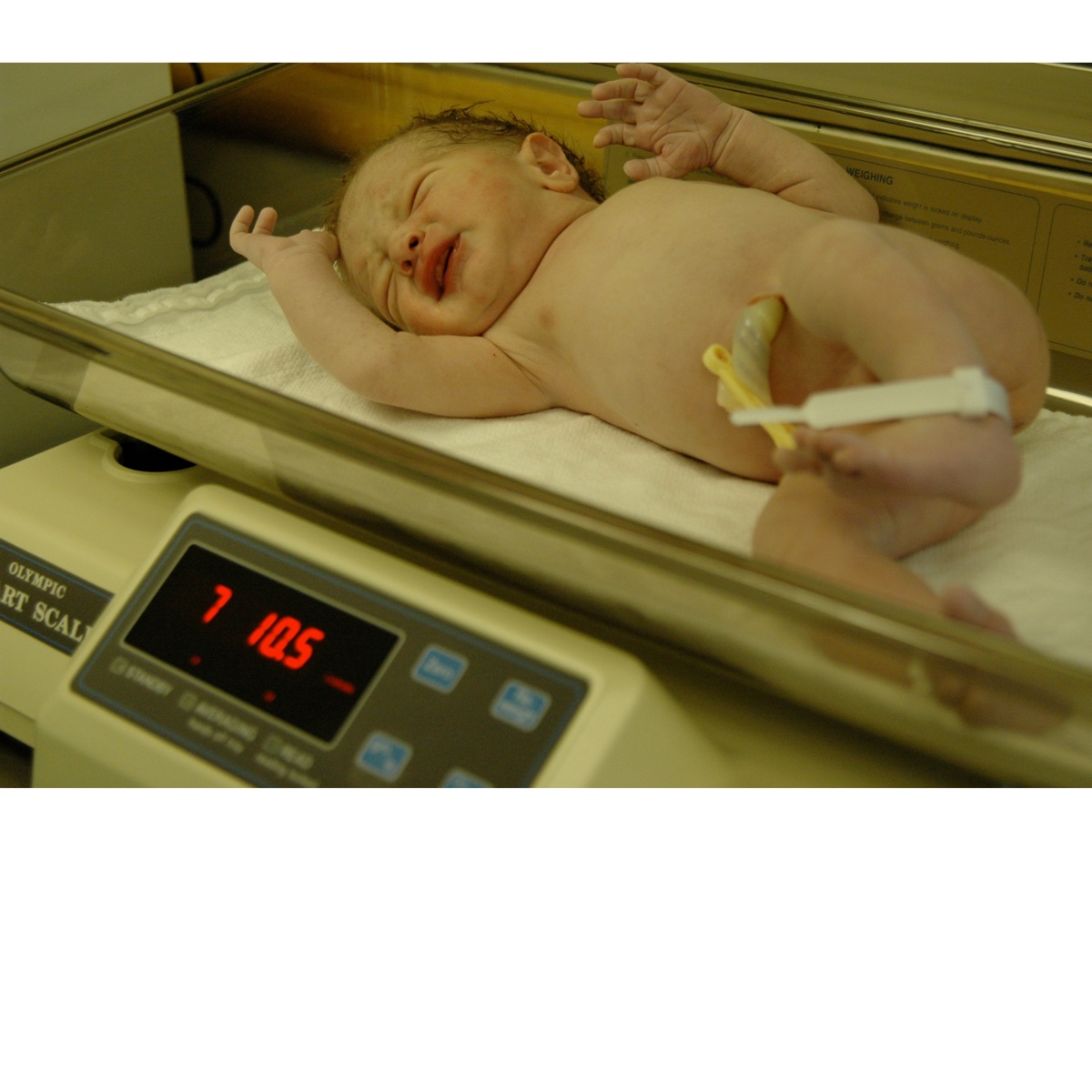
One critical skill that is necessary for assisting breastfeeding dyads is being able to calculate appropriate intake. Whether you are trying to determine if baby is taking enough at the breast or if you need to calculate supplement volume, you need to master this skill.
Learning to calculate intake and supplement volume is a big part of what my students learn in their Pathway 2 program. In this post I’ll teach you how to assess appropriate weight loss and growth, how to determine if baby is getting enough at the breast, and how to calculate supplement volume if needed.
[pac_divi_table_of_contents title="Outline" allow_collapse_minimize="off" level_markers_1="icons" icon_marker_1="E||divi||400" level_markers_2="icons" icon_marker_2="C||divi||400" title_container_bg_color="gcid-02132a14-0aa3-45af-abdc-389c29b58c23" _builder_version="4.19.5" _module_preset="default" title_text_color="#474747" global_colors_info="{%22gcid-02132a14-0aa3-45af-abdc-389c29b58c23%22:%91%22title_container_bg_color%22%93}"][/pac_divi_table_of_contents]
Weight Loss
Weight loss after birth is normal and expected for all newborns. Many things contribute to newborn weight loss, including cesarean delivery, feeding problems, and excessive intravenous fluids. 1Flaherman et al. (2015) conducted a large, multi-center study that gathered weight loss data from 108,907 exclusively breastfed infants. They found that weight loss of >10% is common.1 Their data showed that nearly 5% of babies delivered vaginally and nearly 10% of babies delivered via cesarean had lost more than 10% of birth weight by 48 hours 1. Another study by Grossman et al. (2012) found that more than 20% of infants that were exclusively breastfed lost more than 7% of their birth weight 2. Babies begin to gain weight once mom's mature milk starts to come in, around 48 to 72 hours 2.


A, Estimated percentile curves of percent weight loss by time after birth for vaginal deliveries. Flaherman et al., 2015, p. e20
B, Estimated percentile curves of percent weight loss by time after birth for Cesarean deliveries. Flaherman et al., 2015, p. e20
While weight loss in the newborn is normal and expected, management is required when weight loss is excessive and outside of normal. Being able to calculate weight loss is essential for the lactation consultant.
In the hospital, weights are documented in grams. For ease and accuracy, I recommend converting the baby’s weight from pounds and ounces to grams when calculating percentage of weight loss. This table will help you make that conversion.
Here's an example:
- Baby Boy is 10 days old
- Baby Boy weighed 7lbs 10oz at birth (3459g)
- Baby Boy weighed 6lbs 10oz today (3005g)
- Birth weight- today’s weight= 3459- 3005= 454
- 454/ 3459= 0.13
- 0.15 X 100= 13
- Baby Boy has lost 13% from birth weight
 Baby Boy has lost more than 10% and we need to work with mom to evaluate how much he is taking in and determine how much he needs to be supplemented. According to the Academy of Breastfeeding Medicine protocol for Supplementary Feedings in the Healthy Term Neonate, “Breastfed infants regain birth weight at an average of 8.3 days (95% confidence interval: 7.7-8.9 days),”.3 Baby Boy will likely need some extra milk to help him catch up and regain his birthweight.
According to the Academy of Breastfeeding Medicine, weight loss greater than 8-10% on day 5 or later or greater than 75th percentile for age is a possible indication for supplementation of a healthy, term infant.3 The first step in assessing how much supplement Baby Boy needs is to understand how much milk a breastfed baby needs.
Baby Boy has lost more than 10% and we need to work with mom to evaluate how much he is taking in and determine how much he needs to be supplemented. According to the Academy of Breastfeeding Medicine protocol for Supplementary Feedings in the Healthy Term Neonate, “Breastfed infants regain birth weight at an average of 8.3 days (95% confidence interval: 7.7-8.9 days),”.3 Baby Boy will likely need some extra milk to help him catch up and regain his birthweight.
According to the Academy of Breastfeeding Medicine, weight loss greater than 8-10% on day 5 or later or greater than 75th percentile for age is a possible indication for supplementation of a healthy, term infant.3 The first step in assessing how much supplement Baby Boy needs is to understand how much milk a breastfed baby needs.
Required Milk Intake
It is generally believed that a full supply is somewhere between 25oz and 35oz in 24-hours. This is also the amount babies generally take from about 1-6 months of age4. The amount stays about the same, but as babies age, they take bigger feeds less often.
A 2023 Systematic Review and Meta-Analysis aimed to provide global breastmilk intake estimates. This paper reviewed 167 studies and found that the mean breastmilk intake across all studies was 670mL per day (95% CI: 630-710), and the mean intake of breastmilk per body weight was 117mL/kg per day (95% CI: 112-122) 5. That being said, the standard target feeding volume is 150mL/kg/day 6.

Calculate Supplement Volume
- Baby Boy is 10 days old and is down 15% from birthweight.
- A weighted feed showed a milk intake of 40mL.
- To calculate using 2.5 x weight in pounds:
- Baby Boy is currently 6 lbs, 4 oz. That is 6.25 lbs.
- 6.25 x 2.5= 15.63oz required per day
- 15.63oz/ 8 feedings= 1.95oz/ feed...I'd round up to 2oz
- To calculate using 150mL/kg/day:
- Baby Boy is 2.835kg (2835g x150= 0.001)
- 150mL/2.835kg= 425.25mL needed per day
- 425.25mL/ 8 feedings= 53.16mL/ feed...I'd round up to 2oz

- The results are fairly similar and I recommend to my students to round up to make the math more simple for the parents, anyway. Let’s settle on Baby Boy needing 16oz/ day.
- Now we need to determine how many feeds baby will have per day to divide the supplement. If Baby Boy will feed every 3 hours, he’ll have 8 feedings in 24-hours. That means that he needs 2oz per feed. This is the total amount he needs per feed. The next step is to determine how much extra milk you'll recommend in addition to what he gets at the breast.
- This is where you will need to use your own judgement to assess how much volume to recommend. Here are some things to consider:
- Is the feeding that you saw (weighted) similar to how Baby Boy typically feeds? Was he more awake and alert at this feed or more sleepy?
- If this was a good representation of how baby typically feeds, you can subtract 40mL (or 30mL to make the math easier) from the extra milk you are recommending.
- If this was not a good representation of how baby typically feeds, you will want to recommend the full supplementation volume to ensure that baby gets the required intake, even if the next few breastfeeding sessions aren’t great.
- Do you have concerns about mom’s supply and her being able to provide at least 40ml at the breast at each feeding?
- Was this an early morning feed that you assessed, boosting the volume of milk possibly? Was mom very full because she skipped the last feed or two? If you don’t think this was a good representation of mom’s actual supply, you may want to recommend the full supplementation volume to ensure baby gets the required intake.
- Did mom’s milk just come in within the last 24-hours? If so, her supply is likely rapidly increasing and, as long as baby is able to latch and remove milk effectively, you might assume baby will get at least 40mL at the breast and you recommend only the partial supplementation volume.
- Do you have concerns about mom sticking to the plan and supplementing as you recommend?
- If mom seems very overwhlemed, exhausted, or not willing to put baby to the breast at every feeding, you will want to recommend the full supplementation volume to ensure baby gets the required intake.
- Is the feeding that you saw (weighted) similar to how Baby Boy typically feeds? Was he more awake and alert at this feed or more sleepy?

My Plan:
- I would err on the side of caution and not rely on the weighted feed as predictive of baby's other feedings.
- I would recommend that in addition to breastfeeding, mom offer 2oz 8 times per day until our follow up, which would be in 24- to 48-hours.
- See my post on alternative supplementation methods to understand the evidence surrounding the available methods.
Catch-Up Milk
Another method for calculating supplement for babies that are significantly behind is similar to the above method, but is based on greater required volume for baby. In this method, you multiply the baby’s weight in pounds by 3.0 to arrive at a greater 24-hour required intake. This is used only when baby is very behind, perhaps not yet back to birth weight at 2 weeks.

Other Considerations
It is important to consider not only the weight of the baby, but also the age and stage of breastmilk when calculating required milk intake. For instance, a 9 pound baby on day 1 of life can’t hold 2-3oz per feed (9 x 2.5= 22.5/ 8 or 12 feedings)! That 1 day old baby has a stomach volume that corresponds more closely to the physiologic colostrum volume, which is 2-10ml/ feed. According to the Academy of Breastfeeding Medicine, “the amount of supplement given should reflect the normal amounts of colostrum available, the size of the infant’s stomach (which changes over time), and the age and size of the infant. Intake on day 2 postbirth is generally higher than day 1 in relation to infant’s demand,” 3.

ABM Clinical Protocol #3: Supplementary Feedings in the Healthy Term Breastfed Neonate, Revised 2017, p. 4
My Method:
I teach my students to think about required intake in relation to the age of the baby.
- The first 4-5 days of life: Make recommendations based on stomach and colostrum volume (See ABM table).
- Weeks 1-4: Use the 2.5 x weight in pounds method and round up to the nearest ounce. This is the simplest method and is easy to adjust as baby grows. Divide the total ounces by the number of feedings per day for the per feed volume.
- Month 1-6: Babies take around the same volume during this period. What changes is the frequency and size of feedings. As baby grows, they begin to take more less often (generally- not all babies). The range here is generally about 25-35oz. It’s ok to give parents a range. For example, if baby feeds 8 times/ 24-hours, that’s about 3-4oz per feeding. Some feedings may be closer to 4, some may be much less, but the overall 24-hour total should be in that 25-35oz range.
- Beyond 6 months: Babies tend to take in less breastmilk once they begin solids. It is unlikely that you’ll be calculating supplement for a baby over 6 months of age.
Helpful Tools


Share your thoughts!
Do you have any other methods or tools that you love for calculating weight loss or supplement volume? I'd love to hear your thoughts. Comment below or message me!
References
Flaherman, Valerie J., et al. “Early weight loss nomograms for exclusively breastfed newborns.” Pediatrics, vol. 135, no. 1, 1 Jan. 2015, https://doi.org/10.1542/peds.2014-1532.
Grossman, Xena, et al. “Neonatal weight loss at a US baby-friendly hospital.” Journal of the Academy of Nutrition and Dietetics, vol. 112, no. 3, Mar. 2012, pp. 410–413, https://doi.org/10.1016/j.jada.2011.10.02
Kellams, Ann, et al. “ABM Clinical Protocol #3: Supplementary feedings in the healthy term breastfed neonate, revised 2017.” Breastfeeding, 2022, pp. 796–806, https://doi.org/10.1016/b978-0-323-68013-4.00040-7.
Butte, Nancy, et al. “Nutrient adequacy of exclusive breastfeeding for the term infant during the first six months of life.” Department of Nutrition For Health and Development, https://iris.who.int/bitstream/handle/10665/42519/9241562110.pdf?sequence=1.
Rios-Leyvraz, Magali, and Qisi Yao. “The volume of breast milk intake in infants and young children: A systematic review and meta-analysis.” Breastfeeding Medicine, vol. 18, no. 3, 1 Mar. 2023, pp. 188–197, https://doi.org/10.1089/bfm.2022.0281.
Enteral Nutrition, www.brighamandwomens.org/assets/BWH/pediatric-newborn-medicine/pdfs/dpnm-enteral-nutrition-clinical-practice-guideline-final.pdf. Accessed 8 Feb. 2024.