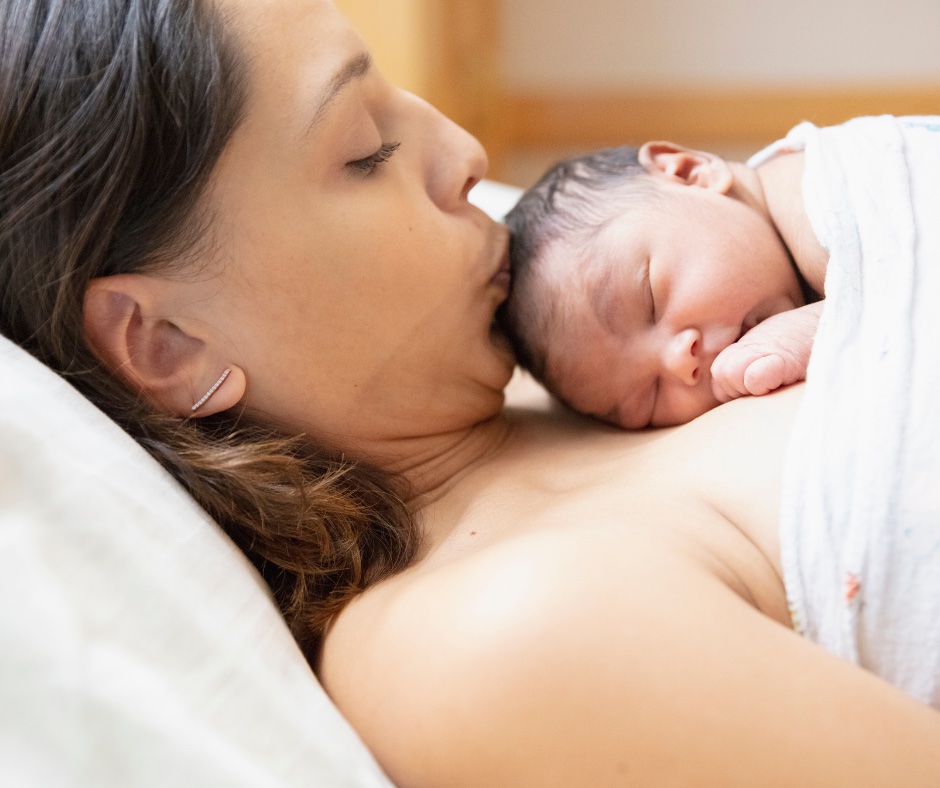
In the first hour after birth, there’s a unique kind of magic that unfolds between a newborn and their parent. This magical moment, known as skin-to-skin, is far more than a warm welcome to the world; it’s a powerful, natural intervention that transforms the transition from womb to world. By placing a newborn on their parent’s bare chest, skin-to-skin sparks an immediate connection that stabilizes the baby’s vital signs, soothes stress, and initiates the natural path to breastfeeding. The magic of skin-to-skin lies in its simplicity—no tools, no technology, just pure human warmth and connection that can shape a healthier start for both mother and child. In this post, we’ll explore why skin-to-skin is so impactful and how it can be easily embraced in the first hour after birth.
Benefits of Skin-to-Skin
Thermoregulation
Skin-to-skin contact plays an essential role in helping newborns regulate their body temperature. Through direct contact, warmth is transferred from the parent to the infant, significantly reducing the risk of hypothermia—a primary concern for newborns, especially in cooler environments. Research by Durmaz et al. (2023) highlights the effectiveness of skin-to-skin in maintaining infants' temperatures, markedly lowering hypothermia risk and supporting overall neonatal health. Similarly, Safari et al. (2018) observed that only 2% of newborns in the skin-to-skin group experienced hypothermia compared to 42% in the control group. Cleveland et al. (2017) further demonstrated that skin-to-skin reduces the need for external heat sources, as the mother’s warmth alone often provides the stability infants need right after birth. This natural thermoregulation is a crucial benefit of skin-to-skin, reinforcing its value in early newborn care.
Vital Signs
Safari et al. (2018) showed a slight decrease in heart rate in some cases, though not all findings were statistically significant. Overall, skin-to-skin generally maintained heart rates within a normal, stable range. Oxygen saturation levels were higher in newborns undergoing skin-to-skin, suggesting improved oxygenation and reduced stress. This effect was particularly beneficial for preterm infants. The review found that respiratory rates were generally stabilized with skin-to-skin, indicating better respiratory function and adaptation. Skin-to-skin is effective for enhancing newborn physiological stability by supporting temperature regulation, maintaining steady heart and respiratory rates, and improving oxygen saturation. The authors recommend implementing skin-to-skin as a standardized practice for all neonates to improve neonatal care quality globally.
Blood Sugar Stablilzation
Newborns often face challenges in maintaining stable blood sugar levels, especially those at higher risk due to maternal health factors. Skin-to-skin helps regulate glucose levels by reducing the baby’s stress and conserving energy, creating a natural safeguard against hypoglycemia. This effect is especially advantageous for infants born to mothers with diabetes (Acta Paediatrica, 2015). A 2023 study by Lord et al. further demonstrated that skin-t0-skin supports stable blood glucose levels in newborns, often reducing the need for additional medical interventions. Infants who experienced skin-to-skin, particularly when started within minutes after birth, showed higher blood glucose concentrations, underscoring skin-to-skin's role in supporting healthy newborn blood sugar regulation.
Breastfeeding
Skin-to-skin has a profound effect on breastfeeding success, promoting an effective latch and encouraging early initiation. Studies indicate that infants who experience skin-to-skin are more likely to breastfeed exclusively and for longer durations, as skin-to-skin boosts both maternal milk production and confidence, fostering a smoother breastfeeding journey. In a 2018 study, Safari et al. found that newborns in the SSC group began breastfeeding significantly sooner—within about 2.41 minutes—compared to 5.48 minutes in the standard care group.
A 2023 study by Daniels et al. further demonstrated that longer skin-to-skin sessions positively correlate with increased production of mother’s own milk, with each minute of skin-to-skin linked to an increase of approximately 2.5 mL of pumped breast milk. Infants who received skin-to-skin at least once weekly also ingested higher volumes of mother’s milk than those who did not, supporting improved feeding outcomes, earlier initiation of enteral feeds, and faster progress toward full oral feeding.
Research by Giang et al. (2022) underscored a dose-response relationship between skin-to-skin duration and exclusive breastfeeding. Infants who experienced skin-to-skin for 15–90 minutes were significantly more likely to be exclusively breastfed compared to those without skin-to-skin, with this likelihood rising even further for sessions exceeding 90 minutes. Additionally, initiating breastfeeding during skin-to-skin further increased the odds of exclusive breastfeeding, highlighting skin-to-skin’s role in a strong start for exclusive breastfeeding.
Cleveland et al. also found skin-to-skin consistently linked to higher breastfeeding initiation and exclusivity rates, stronger mother-infant interactions, and enhanced bonding. Newborns held skin-to-skin displayed better rooting and suckling behaviors, supporting breastfeeding success and a deeply connected start between mother and infant.
Pain and Stress Relief for Newborns
Research highlights the calming and analgesic benefits of skin-to-skin contact (SSC), particularly for premature infants who frequently undergo medical procedures. During painful interventions like blood sampling, SSC has been shown to reduce pain responses, as indicated by more stable heart rates and oxygen levels. The warmth and steady heartbeat of the parent provide natural comfort, offering a safe, non-pharmacological approach to alleviating infant discomfort (Acta Paediatrica, 2015; Journal of Advanced Nursing, 2016).
Cleveland et al. (2017) found that SSC lowered cortisol levels in both mothers and infants, suggesting decreased stress and enhanced relaxation. For newborns, this reduced stress response is linked to faster recovery after procedures and greater calmness, which can also benefit maternal wellbeing and may even reduce the risk of postpartum depression. SSC’s analgesic effects were evident as infants held skin-to-skin during procedures like heel lancing displayed fewer distress signals, such as crying and grimacing, and returned more quickly to their baseline physiological state.
Third Stage of Labor
For mothers, skin-to-skin can have a positive impact during the third stage of labor, which is the delivery of the placenta. Skin-to-skin naturally boosts oxytocin levels—the hormone that supports bonding and induces uterine contractions. This increase in oxytocin facilitates placental separation, minimizes bleeding, and aids in a quicker postpartum recovery. Mothers practicing skin-to-skin tend to experience shorter placental separation times, reducing complications and fostering a smoother transition after birth (NOP2-10-649; Güngör-Öztürk, 2023).
Research by Safari et al. (2018) found that skin-to-skin shortened the duration of the third stage of labor, with mothers in the skin-to-skin group completing this stage in an average of 6 minutes compared to 8.02 minutes in the control group. This reduction is attributed to the higher maternal oxytocin levels stimulated by skin-to-skin, which enhance uterine contractions and support efficient placental separation.
In the end, the magic of skin-to-skin contact lies in its simplicity and profound impact. This gentle practice of holding a newborn close offers warmth, comfort, and security, fostering an unbreakable bond and supporting essential health benefits from the very start. From stabilizing vital signs and regulating blood sugar to boosting breastfeeding success and easing the mother’s recovery, skin-to-skin weaves together the natural instincts of both parent and baby in a way that only enhances their connection. By embracing the power of skin-to-skin contact in those first precious hours and beyond, we give newborns the best possible foundation—a beginning grounded in love, strength, and an intimate, shared journey.