Part of the collectionRunning a Private Practice · 10 articles →
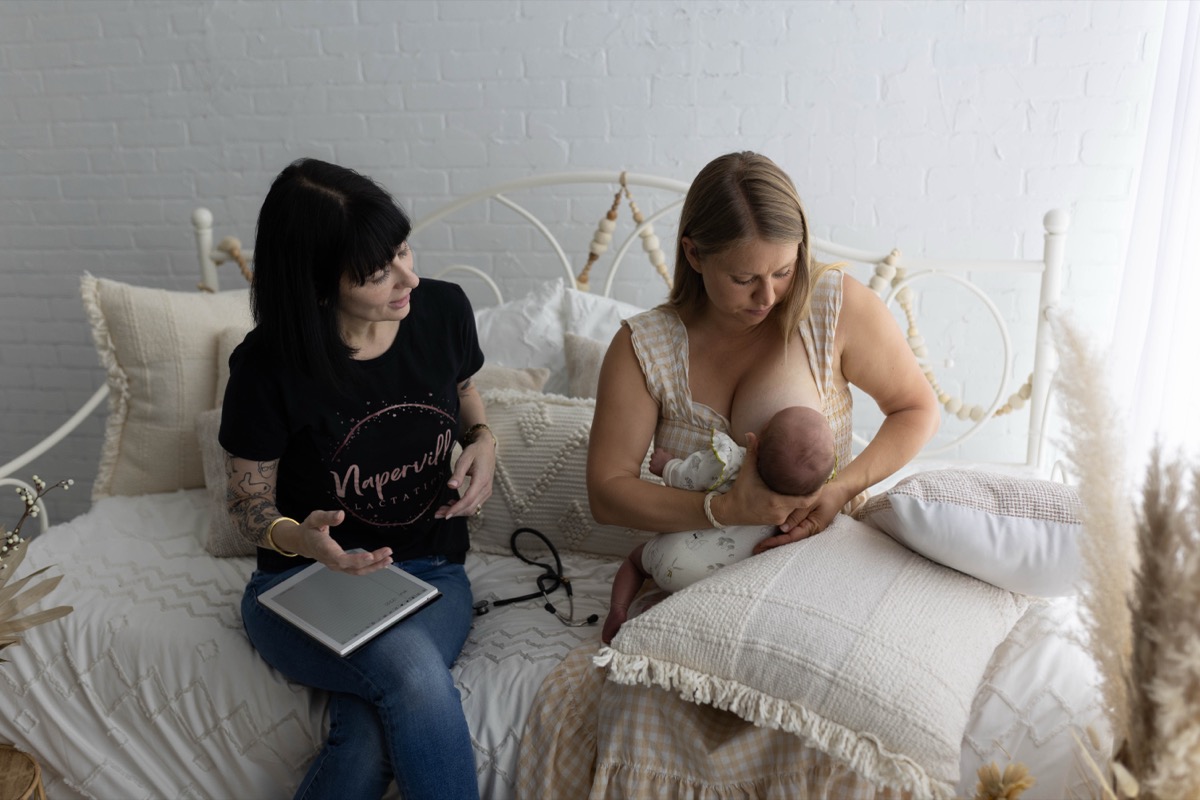
Students ask me frequently about how an in-home lactation visit works. In this post, I’ll walk you through a typical in-home lactation consultation, highlighting key steps such as initial assessments, problem identification, care plan development, and follow-up procedures. I’ll also discuss how to effectively communicate your findings to all relevant parties, ensuring a cohesive care approach.
Whether you're a student or a new lactation consultant, this post will provide you with a practical framework for your in-home visits, equipping you with the knowledge to make a positive impact in the lives of the families you serve. Let's dive in!
Before the Visit
My approach to in-home lactation consulting is centered around simplicity and ease for the mothers I work with. I understand that the postpartum period can be overwhelming, so I aim to minimize any additional tasks for new moms. While some lactation consultants require the completion of intake forms before the initial visit, I do not.
I prefer to gather a comprehensive history directly from the mother during our session. This allows me to not only collect the necessary information but also to engage in a dynamic conversation, enabling me to ask clarifying questions and delve deeper as needed. This way I can ensure that the information is not just thorough but also nuanced, reflecting the unique context of each mother and baby I support.
During the Visit
History
If baby allows, I try to take a thorough history and understand mom’s breastfeeding concerns and goals before observing a feeding. This doesn’t always happen, but it’s ideal when it does. For the history, I want to understand mom’s medical history before getting pregnant, how the pregnancy went, gather details around the birth, and understand how breastfeeding has been going since delivery.
Click here to download my Complete History Taking Guide for a list of the common questions I ask.
Assessment
Once I’ve taken a thorough history and understand mom’s concerns and breastfeeding goals, I’ll assess mom and baby.
For Mom
If I have concerns about possible insufficient glandular tissue, I may do a breast exam by palpating for glandular tissue. If not, I may just visually assess for shape and symmetry. I’ll also be looking for any signs of damage or trauma to the nipples or breasts such as bruises, blisters, or open wounds. I’ll notice the color of the breast to rule out any redness or streaking suggesting mastitis.
For Baby
I’ll start by looking at baby’s position and symmetry at rest. I’ll note if baby’s jaw is symmetrical on both sides and if baby can turn his head to both sides equally. I’ll observe for any caput succedaneum of the baby’s head that may make positioning difficult. I’ll evaluate baby’s jaw protrusion, how wide baby can open his mouth, and the range of motion of his tongue.
Breastfeeding
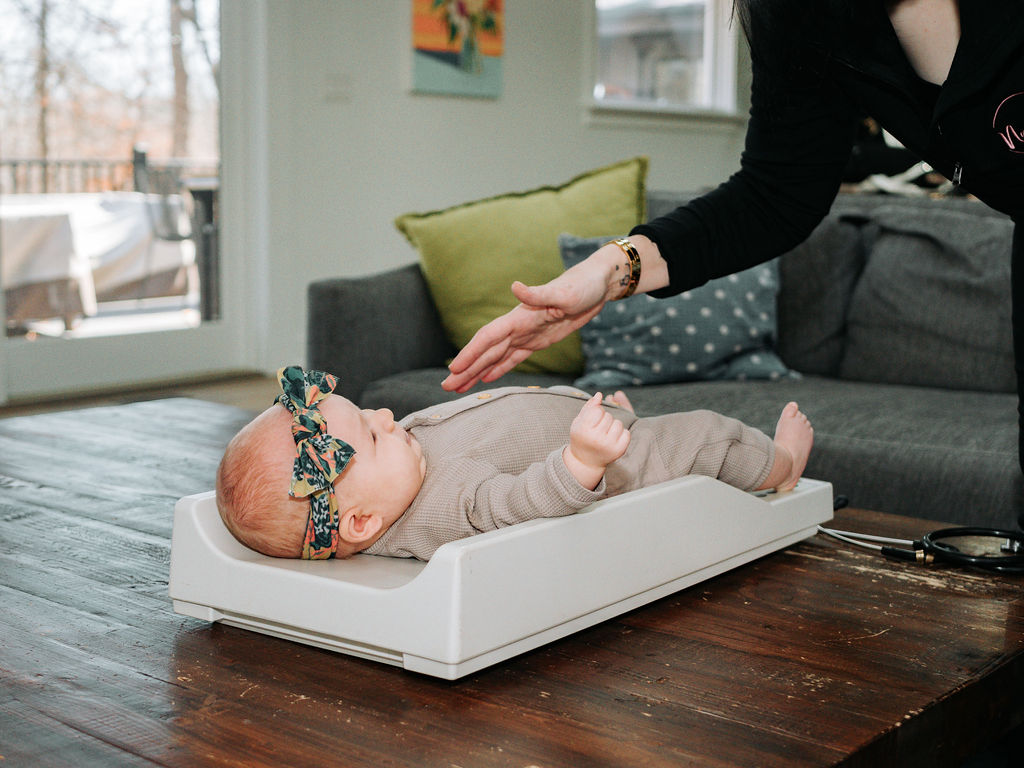
After these assessments, the next step is to observe a breastfeeding if possible. I like to start with doing a pre-feed weight.
You can read all about why and how to do weighted feeds in this post.
Next, I’ll ask mom to demonstrate to me how she has been latching baby, using the same tools and supports, so that I am able to understand where she needs help. Once mom has demonstrated her method, I will ask mom if it’s ok for me to help a bit and/or touch her breasts to facilitate a deeper latch.
Following the feeding, I’ll weigh the baby again to evaluate milk transfer and help mom understand the quality of the breastfeeding session.
Recommendations
I usually begin teaching and making recommendations once baby is latched well and mom is not experiencing pain. This usually includes how to replicate what I have just taught her, what to expect for the next few days, and when and how to follow up with me. Everything that I teach and recommend will be sent to mom via email following the visit.
After the Visit
Plan of Care
Following the visit, I send mom a detailed email containing her plan of care. This will include the teaching, specific instructions with a timeline for how long to follow them, and expectations. My emails also contain many links for videos demonstrating latch or positioning, or links to products that I think mom may benefit from (like a nursing pillow), or even research if necessary.
Notes to Other Providers
Being an IBCLC means that you are part of a team caring for a dyad. We must share our findings with other members of the healthcare team when appropriate. To facilitate this, I ask the mom for the name and phone number of her provider and her baby’s provider. This is optional and some mothers choose not to provide me with this information. However, if they do, I will send a copy of my SBAR chart note to the appropriate provider to keep them in the loop. For example, if I am seeing a mom whose baby is having trouble gaining weight, but the supply doesn’t seem to be the issue, I’ll most likely just send the chart note to the pediatrician. If it’s a supply issue, I will probably send the chart note to both providers if I have that information.
This is also where you would make referrals to other care providers if necessary. If I suspect a tongue-tie, I’ll want to refer mom and baby to an ENT or Pediatric Dentist for evaluation as well as their pediatrician. If baby appears to have a very tight jaw or limited range of motion of the neck, you may refer baby back to their pediatrician and a pediatric therapist for body work.
Follow Up
I encourage my moms to reach out any time with questions. I automatically follow up with them 2 days after the visit via text to check in if they haven’t already texted first. I offer my moms unlimited access to me via text. This is only appropriate for things that can be answered easily over text like about how long to pump, or how long milk can stay at room temperature, etc. However, for issues that cannot be answered easily via text, I encourage my moms to schedule another visit with me.
For moms having a lot of trouble, we may schedule a follow-up visit during the visit. But for many mothers, they tend to work with the care plan on their own for a few days and then reach out to schedule another visit if they are still having trouble. I typically see all of the mothers I care for at least twice in their breastfeeding journey, but some as many as 10 times.
While all aim of all lactation visits is to help mom find solutions to her breastfeeding concerns and to help her reach her breastfeeding goals, the location of the visit can impact how this is accomplished and may affect breastfeeding outcomes. In 2023, I conducted a study in which I looked at how different lactation visit types (outpatient or in-home) affected breastfeeding outcomes and self-efficacy. Click here to read more about what I found!
Do you have any questions about in-home visits that weren't answered here? Comment below or send me a message and I'll share my thoughts!
Do you want to learn my Method for History Taking at a visit?