Updated June 2026 · Originally published December 8, 2023
One question I get a lot from students and mentees is, "What's the best way to stay up-to-date with lactation research?" With the rate at which new studies are published, it can feel daunting to even know where to begin. And yet staying current is what separates care that's grounded in evidence from care that's grounded in habit.
The good news: you don't need to read everything. You need a system. Below is the exact approach I use and teach — a mix of professional memberships, free resources, automated alerts, and a short list of sources worth following. Whether you're a seasoned IBCLC or just starting your journey in this field, by the end of this post you'll have a repeatable workflow for keeping up without the overwhelm.
Step 1: Start with memberships
Joining a professional organization comes with many benefits, and for staying current, the most important one is full access to the peer-reviewed journals. This is why I recommend membership: it's the most reliable way to read the research that shapes our field, in full, as it's published. For lactation specifically, there are two organizations I recommend joining.
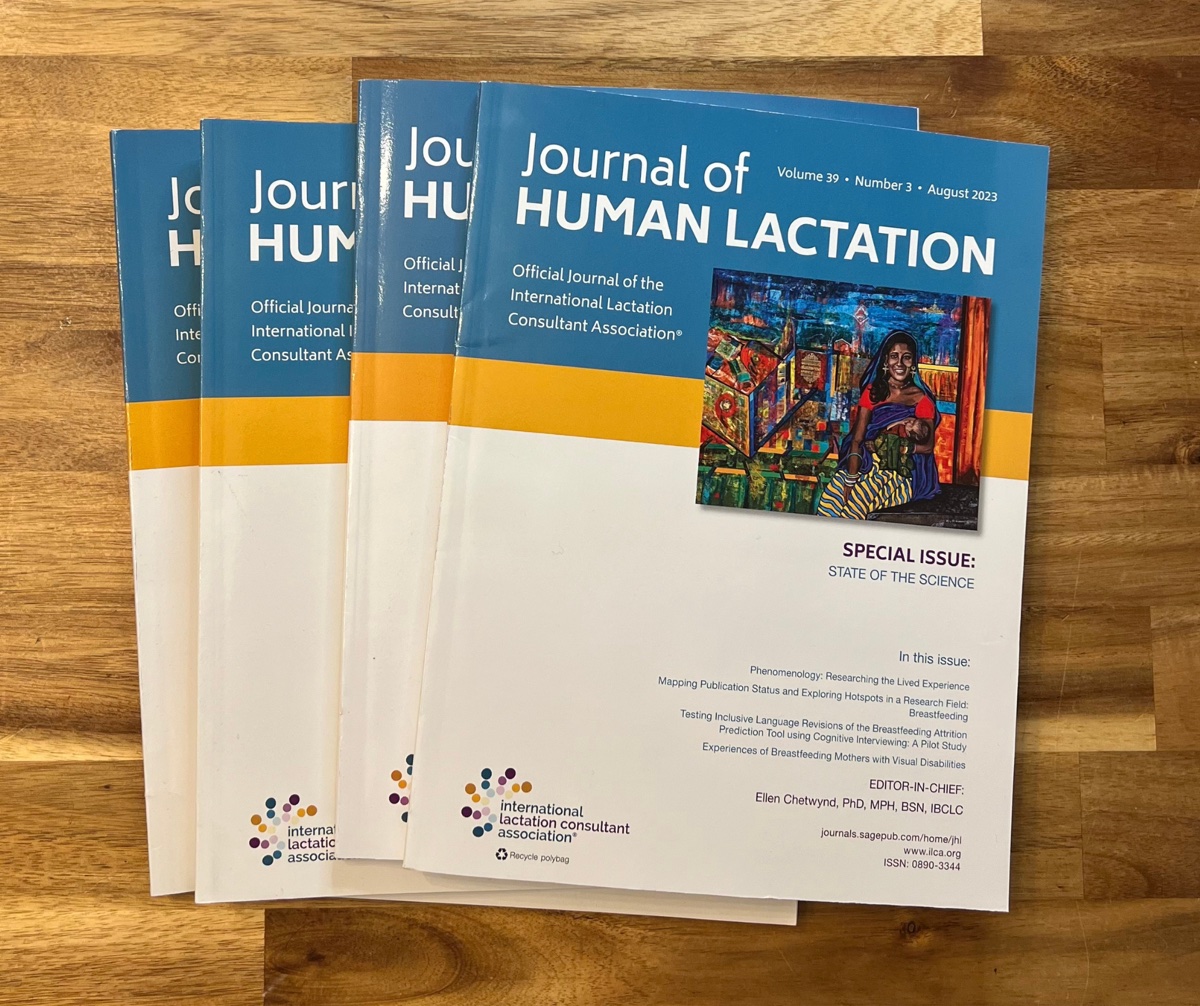
The first is the International Lactation Consultant Association (ILCA). Membership includes full digital access to the Journal of Human Lactation (JHL) — the field's flagship peer-reviewed journal — along with the archives. ILCA membership is open to anyone who supports breastfeeding families; you don't have to hold the IBCLC credential to join, which makes it accessible to students and aspiring professionals.
The second is the United States Lactation Consultant Association (USLCA). Membership includes full access to Clinical Lactation, USLCA's official journal, which leans practical and clinically applied.
Both memberships give you complete access to their respective journals, not just abstracts — so if you can join both, you'll have the widest research coverage available in the field. If you're starting with one, either gets you into a journal you'll return to again and again.
One correction to the original version of this post: neither organization offers a dedicated student membership. I want to be accurate about that, because I've seen students factor a nonexistent discount into their budgeting. Pricing changes periodically, and ILCA now uses an equity-based structure with rates that vary by country, so I'd point you to each organization's current membership page rather than quote figures here. The investment is worth it — full journal access is the foundation of staying current.
The free resources in the next step are a powerful complement to membership, especially for filling gaps or stretching a tight budget. But membership is where I'd start.
Step 2: Tap into free, open-access research
Membership gets you into the core journals, and you'll also want to know what's available beyond them. A large and growing share of the literature is free, and these sources round out your access whether or not you're a member.
- PubMed (pubmed.ncbi.nlm.nih.gov) — The largest biomedical literature database. Searching is always free, and many entries link to full text.
- PubMed Central (PMC) — A free full-text archive. When you find a study on PubMed, look for the "Free PMC article" tag to read the entire paper, not just the abstract.
- Google Scholar (scholar.google.com) — Broad coverage across disciplines, and it often surfaces free PDFs that a standard database search misses.
- ABM Clinical Protocols (bfmed.org/protocols) — More on these below, but worth naming here too: the Academy of Breastfeeding Medicine publishes its clinical protocols openly. These are some of the most practice-shaping documents in the field, and they're free.
- Government and global health bodies — The CDC, the American Academy of Pediatrics (AAP), and the World Health Organization (WHO) all publish breastfeeding guidance and data openly. These are the references I reach for when a family or a colleague asks "what's the official recommendation?"
A practical tip: when you hit a paywall on a study you want, search the title in Google Scholar, or check the author's institutional page. Open-access versions are often a click away.
Step 3: Set up alerts so the research comes to you
The biggest shift you can make is to stop hunting for research and let it find you. Two free alert systems do most of the work.
Google Scholar alerts. Create an alert for a keyword like breastfeeding or a narrower term like tongue tie infant or donor human milk NEC. Anytime new research matching your criteria is published, you'll get an email with links to the abstracts. To set one up, run your search in Google Scholar, then click the envelope ("Create alert") icon on the results page.
PubMed (My NCBI) alerts. Create a free NCBI account, run a search, and save it as an alert. PubMed will email you new results on whatever schedule you choose. PubMed's filters are more precise than Scholar's, so this is my preference for tracking a specific clinical topic without a flood of noise.
Journal table-of-contents alerts. Most journals — including JHL, Clinical Lactation, and Breastfeeding Medicine — let you subscribe to an email each time a new issue publishes. This is the lowest-effort way to skim everything coming out of the journals that matter most.
Start with one or two alerts, not ten. A focused inbox is one you'll actually read.
Step 4: Follow the journals and organizations that matter
When you're deciding where to spend your limited reading time, these are the sources I'd prioritize.
Journals
- Journal of Human Lactation — the field's primary peer-reviewed journal (ILCA)
- Clinical Lactation — practical, clinically oriented (USLCA)
- Breastfeeding Medicine — the official journal of the Academy of Breastfeeding Medicine, and where the ABM protocols are published
- Maternal & Child Nutrition, Pediatrics, and Acta Paediatrica — broader maternal-child journals that regularly publish lactation-relevant research
Organizations
- Academy of Breastfeeding Medicine (ABM) — Their clinical protocols are essential reading. Each one tackles a common clinical problem (mastitis, supplementation, jaundice, hypoglycemia, and many more) and translates the evidence into management guidance. Because they're free and regularly revised, they belong on every clinician's bookmark bar.
- ILCA and USLCA — Beyond the journals, both publish practice resources, clinical guidance, and continuing education.
- CDC, AAP, and WHO — For official recommendations, surveillance data, and policy.
Step 5: Listen
If reading dense studies after a full clinical day feels like too much, audio is a great way to absorb new evidence in a more digestible form.
On my own podcast, Behind the Latch, I regularly break down recent studies that land in my inbox from my Google Scholar alerts — what the study found, and more importantly, what it means for your practice.
I also recommend the Breastfeeding Medicine Podcast with Dr. Anne Eglash and Dr. Karen Bodnar. Each episode reviews a couple of new abstracts or articles, with new episodes roughly monthly. These are bite-size insights into emerging research that translate directly to clinical care.
Step 6: Read like a clinician, not just a consumer
Here's the part that often gets skipped: staying current isn't only about finding research. It's about evaluating it.
Not all evidence carries equal weight. A single small observational study is not the same as a systematic review, and a clinical protocol — even a respected one — is a guideline, not gospel. A useful example is ABM's Clinical Protocol #36 on the mastitis spectrum: it shifted practice significantly, and it also drew published debate from clinicians and researchers about aspects of its recommendations (Douglas, 2023). That kind of professional disagreement isn't a problem with the evidence base; it is the evidence base working as intended.
So as you read, ask:
- What type of study is this, and how strong is that design?
- How large was the sample, and who was studied?
- Do the conclusions actually follow from the data, or is the framing reaching?
- Has this been replicated, or is it a single finding?
You don't need to become a biostatistician. You do need to hold new findings up to the light before you change your practice. Building that habit is what turns "I read a lot of studies" into "I make sound, evidence-based decisions."
Build a sustainable routine
A system only works if you can keep it up. Here's a simple weekly cadence I'd suggest starting with:
- Daily (2 minutes): Skim the subject lines of your Scholar and PubMed alerts. Star anything worth a closer look.
- Weekly (20–30 minutes): Read one or two starred abstracts in full. Listen to a podcast episode on your commute.
- Monthly: Browse the new table of contents from one journal, and check whether any ABM protocols you rely on have been revised.
That's it. Less than an hour a week keeps you genuinely current.
Bringing it together
Staying up-to-date with lactation research doesn't have to be overwhelming. Memberships give you direct access to the field's key journals. Free databases and the ABM protocols fill the gaps when budget is tight. Alerts bring the newest research to your inbox automatically. Following the right journals and organizations keeps your reading focused. Podcasts make the evidence digestible. And reading critically ensures that what you absorb actually improves your care.
Whether you're a seasoned professional or a student just beginning, these methods will keep you informed, involved, and at the forefront of the field — so you can provide the most effective, evidence-based support to the families you serve. In lactation, continuous learning isn't optional. It's the foundation of confident, competent practice.
Want to learn my method for history taking at a visit?
Click here to download the free guide.
Reference
Douglas, P. (2023). Does the Academy of Breastfeeding Medicine's Clinical Protocol #36 'The Mastitis Spectrum' promote overtreatment and risk worsened outcomes for breastfeeding families? Commentary. International Breastfeeding Journal, 18(1), 51. https://doi.org/10.1186/s13006-023-00588-8