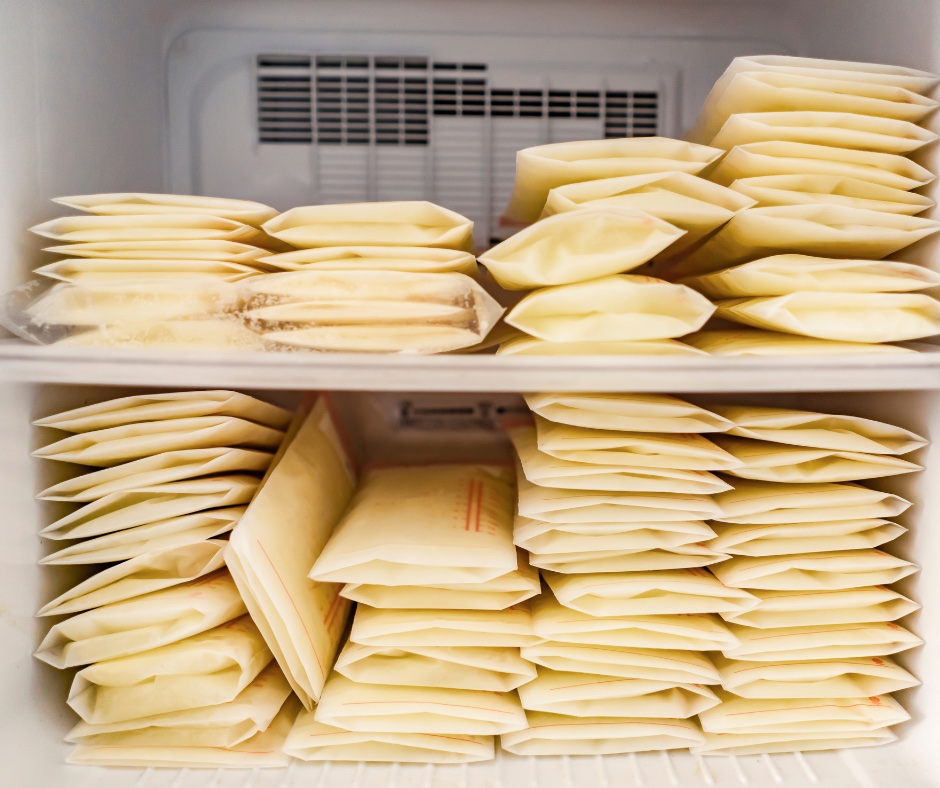
Human milk storage and pasteurization are critical topics for lactation professionals. Whether supporting families storing expressed milk at home or working with donor milk in clinical settings, understanding the effects of storage conditions and processing methods on milk composition ensures optimal nutritional and immunological benefits for infants. This post explores the impact of various storage techniques and pasteurization on human milk, backed by recent research.
The Impact of Freezer Storage on Human Milk Integrity
Freezing is a common method for preserving human milk, but how does it affect its composition? Research shows that milk can be stored safely at −20°C for up to nine months with minimal impact on macronutrients like fat, protein, and immunological factors such as lactoferrin and secretory IgA. However, certain changes do occur:
- Triacylglycerol levels significantly decrease during home storage, impacting the milk's fat content and energy value (Soria et al., 2025).
- Lipid peroxides increase with extended freezing, indicating oxidation that may reduce milk's antioxidant properties (Soria et al., 2025).
- Rancid-flavor compounds increase with frozen storage, particularly when stored for longer than seven days, which may make milk less palatable to infants (Hung et al., 2018).
- Milk pH declines with storage, which could affect taste and microbial activity (Ahrabi et al., 2016).
Despite these changes, freezer storage remains a viable option for preserving the nutritional and immunological quality of milk.
Refrigeration and Bacterial Viability
Storing human milk in the refrigerator (at or below 4°C) is an alternative to freezing, but its impact on milk’s microbiome is not always considered. A systematic review found:
- Total bacterial and gram-positive bacterial colony counts declined significantly after just three months of refrigeration before freezing (Schlotterer & Perrin, 2018).
- While milk diversity remained stable, shifts in bacterial populations could influence the milk’s probiotic benefits (Stinson et al., 2022).
- Up to four days of refrigeration is generally safe, but prolonged refrigeration before freezing may accelerate bacterial decline (Stinson et al., 2022).
These findings support the Academy of Breastfeeding Medicine (ABM) guidelines, which recommend refrigeration for up to four days before freezing when necessary.
Pasteurization: How It Affects Milk Quality
Pasteurization is widely used in donor milk banks to eliminate harmful pathogens, but it also impacts bioactive components. Two common methods are Holder Pasteurization (62.5°C for 30 minutes) and High-Temperature Short-Time (HTST) Pasteurization (72°C for 5–15 seconds).
- Holder Pasteurization significantly reduces osteopontin, which plays a role in infant immune system development (McClanahan et al., 2024).
- Pasteurization leads to reductions in antioxidants and free fatty acids, making pasteurized milk less rich in bioactive lipids than fresh milk (Soria et al., 2025).
- Despite nutrient losses, pasteurized donor milk remains the best alternative when maternal milk is unavailable (McClanahan et al., 2024).
- Fortified pasteurized donor milk may have further nutritional changes, but research on its long-term storage is limited (Schlotterer & Perrin, 2018).
For lactation professionals, it’s important to balance safety with nutrient retention. Donor milk banks aim to minimize storage time at −20°C before pasteurization to preserve milk quality (Nessel et al., 2019).
The Risk of Microplastic Contamination from Storage Bags
A new concern in human milk storage is the release of microplastics from plastic storage bags. A recent study found that:
- Polyethylene (PE) and polyethylene terephthalate (PET) microplastics were released into milk stored in plastic bags (Liu et al., 2023).
- Infants consuming milk from storage bags may ingest microplastics daily, though the long-term health effects are still unknown (Liu et al., 2023).
To reduce microplastic exposure, professionals can recommend glass or food-grade silicone storage options.
Thawed Milk: 12 or 24 Hours?
One area of ongoing debate is how long previously frozen milk should be stored in the refrigerator after thawing. The Academy of Nutrition and Dietetics allows 24 hours, while the Human Milk Banking Association of North America (HMBANA) recommends only 12 hours (Steele et al., 2020). Research suggests that microbial risks do not significantly increase within 24 hours, but factors such as milk fortification and handling practices should be considered in hospital settings (Steele et al., 2020).
Key Takeaways for Lactation Professionals
- Freezing milk at −20°C for up to 9 months preserves macronutrients, but lipid oxidation and rancidity may occur.
- Refrigeration up to four days is safe, but extended refrigeration before freezing may affect bacterial viability.
- Pasteurization significantly reduces some immune and lipid components, but donor milk remains a vital resource for vulnerable infants.
- Microplastics from storage bags are an emerging concern, suggesting the need for alternative storage solutions.
- Thawed milk is safe for up to 24 hours, but institutional policies may vary.
By staying informed on the latest research, lactation professionals can guide families and healthcare teams on best practices for milk storage and handling, ensuring optimal nutrition and safety for infants.
References
Ahrabi, A. F., Handa, D., Codipilly, C. N., Shah, S., Williams, J. E., McGuire, M. A., Potak, D., Aharon, G. G., & Schanler, R. J. (2016). Effects of Extended Freezer Storage on the Integrity of Human Milk. The Journal of Pediatrics, 177, 140–143. https://doi.org/10.1016/j.jpeds.2016.06.024
Hung, H.-Y., Hsu, Y.-Y., Su, P.-F., & Chang, Y.-J. (2018). Variations in the rancid-flavor compounds of human breastmilk under general frozen-storage conditions. BMC Pediatrics, 18, 94. https://doi.org/10.1186/s12887-018-1075-1
Liu, L., Zhang, X., Jia, P., He, S., Dai, H., Deng, S., & Han, J. (2023). Release of microplastics from breastmilk storage bags and assessment of intake by infants: A preliminary study. Environmental Pollution, 323, 121197. https://doi.org/10.1016/j.envpol.2023.121197
McClanahan, K. G., Reese, J., Weitkamp, J. H., & Olivares-Villagómez, D. (2024). Effects of pasteurization on osteopontin concentrations in human breastmilk. Pediatric Research, 95, 641-646. https://doi.org/10.1038/s41390-023-02838-1
Nessel, I., Khashu, M., & Dyall, S. C. (2019). The effects of storage conditions on long-chain polyunsaturated fatty acids, lipid mediators, and antioxidants in donor human milk—A review. Prostaglandins, Leukotrienes and Essential Fatty Acids, 149, 8-17. https://doi.org/10.1016/j.plefa.2019.07.009
Schlotterer, H. R., & Perrin, M. T. (2018). Effects of refrigerated and frozen storage on Holder-pasteurized donor human milk: A systematic review. Breastfeeding Medicine, 13(7), 465-472. https://doi.org/10.1089/bfm.2018.0135
Soria, E. A., Cortez, M. V., Marchiori, G. N., Jubete, M., Lázaro, L. A., & López Merzbacher, M. I. (2025). Impact of freezing, storage, and pasteurization on nutritional components and redox biomarkers in human milk donations. Breastfeeding Medicine, 00, 1-6. https://doi.org/10.1089/bfm.2024.0337
Steele, C., Ehwerhemuepha, L., & Collins, E. (2020). 24-hour vs. 12-hour storage recommendations for previously frozen (thawed) fortified human milk. Journal of the Academy of Nutrition and Dietetics, 120(8), 1283-1289. https://doi.org/10.1016/j.jand.2020.04.017
Stinson, L. F., Trevenen, M. L., & Geddes, D. T. (2022). Effect of cold storage on the viable and total bacterial populations in human milk. Nutrients, 14(9), 1875. https://doi.org/10.3390/nu14091875