

Nipple shields are a topic of considerable debate in the breastfeeding community. While they can be a valuable tool for mothers facing certain breastfeeding challenges, they also come with potential downsides that must be carefully managed. In this blog post, we’ll explore the appropriate use of nipple shields, their impact on milk transfer, the evidence supporting and cautioning their use, and some key examples where they might be beneficial.

What Are Nipple Shields?
Nipple shields are thin, flexible silicone covers that fit over the nipple during breastfeeding. They are often recommended as a temporary solution for mothers experiencing difficulties such as nipple pain, flat or inverted nipples, or latching issues. However, their efficacy and safety are subjects of ongoing research and debate.
Indications for Nipple Shield Use
Nipple shields can be helpful in various situations, but they should be used under the guidance of a healthcare professional. Here are some examples where nipple shields may be appropriate:
1. Flat or Inverted Nipples
- Scenario: A mother with flat or inverted nipples may find that her baby struggles to latch effectively. This can lead to frustration and challenges in establishing a successful breastfeeding relationship.
- Nipple Shield Use: A nipple shield can provide a firmer surface for the baby to latch onto, mimicking the shape of a protruding nipple. This can facilitate easier latching for the baby, particularly in the early days, while the mother continues working on techniques to encourage natural nipple eversion over time.
2. Premature or Small-for-Gestational-Age Infants
- Scenario: Premature babies or those who are small for gestational age often have a weaker suck, making it challenging for them to generate the necessary vacuum for effective milk transfer.
- Nipple Shield Use: In these cases, a nipple shield can help by providing a more stable latch, reducing the effort required by the baby to maintain suction. This can support early breastfeeding efforts while the baby gains strength and suckling skills.
3. Nipple Pain Due to Severe Nipple Trauma
- Scenario: Severe nipple pain, caused by cracks, blisters, or bleeding, can make breastfeeding unbearable, leading some mothers to consider stopping breastfeeding altogether.
- Nipple Shield Use: A nipple shield can act as a protective barrier between the baby’s mouth and the mother’s nipple, allowing her to continue breastfeeding while her nipples heal. This can be crucial in preventing the cessation of breastfeeding and supporting the mother’s overall breastfeeding goals.
4. Latching Difficulties in the Early Days
- Scenario: Both the mother and baby are learning to breastfeed in the early days, and some babies may struggle with achieving a deep, effective latch.
- Nipple Shield Use: Temporarily using a nipple shield can help the baby achieve a deeper latch, making breastfeeding more efficient and comfortable. This can also boost the mother’s confidence as she practices improving the baby’s latch without the shield over time.
5. Re-establishing Breastfeeding After a Separation
- Scenario: If a mother and her newborn are separated after birth due to medical reasons, and the baby is bottle-fed during that time, the baby might struggle to transition back to breastfeeding.
- Nipple Shield Use: A nipple shield can be used as a transitional tool, mimicking the feel of a bottle nipple while encouraging the baby to latch onto the breast. This can help the baby adjust to breastfeeding after becoming accustomed to bottle-feeding.
6. Overactive Letdown or Fast Milk Flow
- Scenario: Some mothers experience an overactive letdown, resulting in a fast milk flow that can overwhelm the baby. The baby might choke, cough, or pull away from the breast, making feeding sessions stressful for both.
- Nipple Shield Use: A nipple shield can slightly slow the milk flow, giving the baby more control over the pace of feeding. This can make breastfeeding more comfortable for the baby and reduce the stress associated with a fast letdown.
Milk Transfer and Breastfeeding Outcomes: What the Evidence Says
Nipple shields have long been used as an aid for breastfeeding, especially in cases of poor latch, nipple pain, or when the infant is premature. While they offer potential benefits in specific situations, the use of nipple shields remains controversial due to concerns about their impact on milk transfer, breastfeeding duration, and overall breastfeeding success.

Physiological Impact on Milk Transfer
One of the primary concerns with nipple shield use is its potential to impair milk transfer from the breast to the infant. Research has shown mixed results, but there is a consistent trend indicating that nipple shields can reduce the amount of milk transferred during breastfeeding.
- Coentro et al. (2020) conducted a mechanistic study that found nipple shield use significantly reduced the percentage of available milk removed (PAMR) during pumping sessions. The median PAMR was 69% without a nipple shield and 41% with a shield, suggesting that nipple shields may hinder milk removal efficiency(12884_2020_Article_3191).
- McKechnie and Eglash (2010) reviewed earlier studies and noted similar findings. For example, Woolridge et al. (1980) found that a “Mexican hat” nipple shield severely impaired milk transfer, reducing it from an average of 46.4 grams without a shield to 19.5 grams with the shield. Even with a thinner latex shield, milk transfer was still reduced, though to a lesser extent(bfm.2010.0003).
These findings underscore the importance of careful monitoring when using nipple shields, as reduced milk transfer could lead to inadequate infant nutrition and potentially diminish the mother’s milk supply.
Nipple Shields in Premature Infants
Nipple shields are often used in neonatal intensive care units (NICUs) to facilitate breastfeeding in premature infants who may struggle with latching or maintaining an effective suck.
- Meier et al. (2000) conducted a study on premature infants and found that nipple shields helped increase milk transfer compared to feedings without a shield. The study concluded that nipple shields could be beneficial for premature infants with latch difficulties, allowing them to receive more milk(bfm.2010.0003).
However, McKechnie and Eglash (2010) cautioned against the routine use of nipple shields in premature infants. They emphasized that while nipple shields might help in cases where other interventions fail, their use should be limited to situations where the infant has demonstrated persistent difficulty with breastfeeding(bfm.2010.0003).
Maternal Satisfaction and Breastfeeding Duration
The impact of nipple shields on maternal satisfaction and breastfeeding duration has been explored in several studies, with varying results.
- Chertok et al. (2009) conducted a survey of mothers who used nipple shields and found that while many reported positive experiences, there was a higher likelihood of formula supplementation and early breastfeeding cessation among those using nipple shields. This suggests that while nipple shields can be helpful in the short term, they may contribute to challenges in maintaining breastfeeding long-term(bfm.2010.0003).
- In contrast, McKechnie and Eglash (2010) reviewed studies that reported on mothers’ experiences with nipple shields and found that many mothers felt nipple shields helped them continue breastfeeding when they might have otherwise stopped. However, the review also highlighted the need for ongoing support and monitoring to ensure that nipple shield use does not negatively impact breastfeeding outcomes(bfm.2010.0003).
Risks Associated with Nipple Shield Use
While nipple shields can be a useful tool in managing specific breastfeeding challenges, they also come with certain risks.
- Reduced Milk Transfer: Multiple studies have consistently shown that nipple shields can reduce the amount of milk transferred during breastfeeding, which could lead to decreased milk supply and inadequate infant weight gain(12884_2020_Article_3191)(bfm.2010.0003).
- Interruption of Exclusive Breastfeeding: A study by Santos et al. (2023) found that the use of nipple shields in the maternity ward was associated with an increased risk of exclusive breastfeeding interruption within the first six months. The risk was particularly high in the first few months postpartum, suggesting that early introduction of nipple shields may contribute to premature weaning(1-s2.0-S026661382300276…).
The literature on nipple shields presents a complex and nuanced picture. While nipple shields can provide significant benefits in certain situations, such as helping premature infants latch or providing relief from nipple pain, their use should be approached with caution. The potential for reduced milk transfer and early breastfeeding cessation highlights the importance of careful monitoring and support for mothers who use nipple shields. Healthcare providers should assess the individual needs of each mother-infant dyad and consider the potential risks and benefits of nipple shield use on a case-by-case basis. Further research is needed to clarify the long-term effects of nipple shields on breastfeeding outcomes, particularly in diverse populations and in the context of different breastfeeding challenges.
Types of Nipple Shields Available
As a lactation professional, it’s essential to have a deep understanding of the various types of nipple shields available and how they can be utilized to support breastfeeding. Here’s a detailed overview of the different types of nipple shields, their intended uses, and important considerations for selecting the appropriate shield for each mother-baby dyad.
Standard Nipple Shields
Standard nipple shields are the most commonly used type, made from thin, flexible silicone. These shields cover the nipple and areola, with a small opening at the tip for milk flow. They provide structural support for latching and can help mothers with specific breastfeeding challenges.

- Clinical Applications:
- Flat or Inverted Nipples: Ideal for mothers with anatomical challenges that hinder effective latching.
- Latching Difficulties: Useful when babies struggle with maintaining a latch, particularly in the early days of breastfeeding.
- Considerations:
- Impact on Milk Transfer: Standard shields can sometimes interfere with milk transfer, so it’s crucial to monitor the baby’s weight gain and feeding behavior closely.
- Guidance Required: Always ensure that mothers are properly educated on the correct use of the shield to avoid potential issues with milk supply or nipple confusion.

Contact Nipple Shields
Contact nipple shields are designed with a cut-out section that exposes part of the areola, allowing for direct skin-to-skin contact during breastfeeding. This design aims to preserve the benefits of nipple shields while maintaining essential tactile stimulation for both mother and baby.
- Clinical Applications:
- Maintaining Skin-to-Skin Contact: Beneficial when skin-to-skin contact is important, particularly for stimulating milk flow and enhancing bonding.
- Transitioning Tool: Useful for mothers and babies who may benefit from gradual transitioning back to direct breastfeeding.
- Considerations:
- Transition Planning: Incorporate a plan to eventually wean the baby off the shield, ensuring the mother feels supported throughout the process.
Size Variations: Small, Medium, and Large Shields
- Description: Nipple shields come in various sizes, typically categorized as small, medium, and large, which correspond to the diameter of the shield and the area it covers. Selecting the correct size is crucial for both effectiveness and comfort.
- Clinical Applications:
- Customized Fit: Important for matching the shield to the mother’s nipple size and the baby’s oral anatomy to ensure optimal latch and milk transfer.
- Specialized Needs: Different sizes may be necessary depending on specific breastfeeding challenges, such as preterm infants with smaller mouths.
- Considerations:
- Size Accuracy: Accurate measurement and fitting are essential to prevent issues such as nipple trauma, poor milk transfer, or discomfort.
Selecting the Appropriate Nipple Shield
As a lactation professional, your role in selecting and fitting a nipple shield is crucial. Here are key steps to ensure the best outcomes:
- Comprehensive Assessment: Begin with a thorough assessment of the mother’s and baby’s needs. Consider factors such as nipple anatomy, the baby’s latching ability, and any specific breastfeeding challenges.
- Education and Support: Provide clear instructions on the correct use of the shield, emphasizing the importance of monitoring feeding sessions, milk transfer, and the baby’s weight gain.
- Follow-Up and Transition: Regular follow-ups are essential to monitor the baby’s progress and to create a plan for weaning off the shield as appropriate. Ensure that the mother feels supported and confident throughout this process.
- Collaboration with Healthcare Providers: In cases involving complex needs or when custom-fit shields are used, collaborate with other healthcare providers to ensure comprehensive care for the mother and baby.
Avoid These Styles of Nipple Shields:

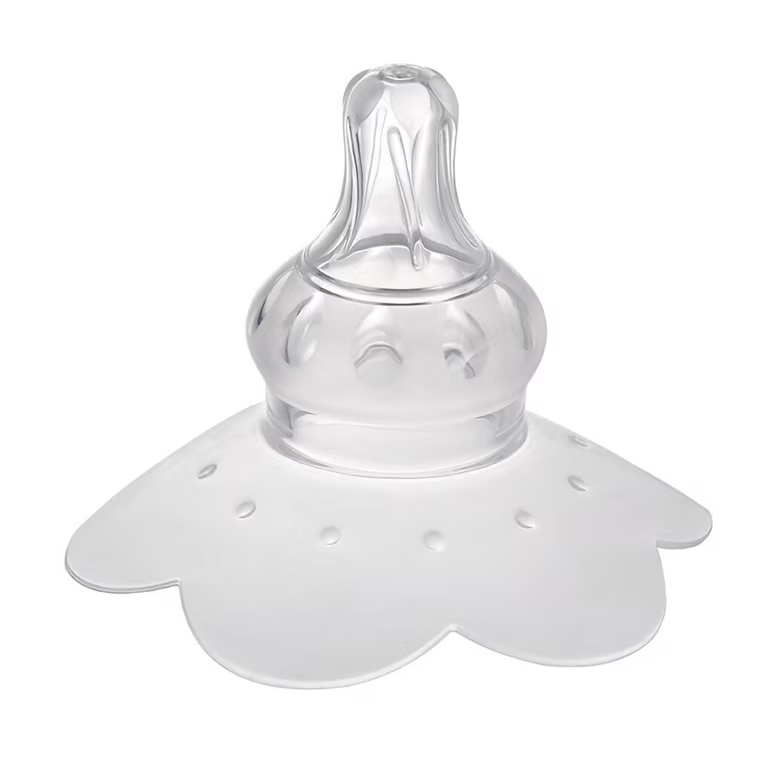

Key Takeaways for Lactation Professionals: Evidence-Based Practice with Nipple Shields
- Leverage Evidence to Guide Shield Use: The decision to use a nipple shield should be informed by the latest research. Studies highlight both the benefits and potential drawbacks of nipple shields, particularly regarding milk transfer and long-term breastfeeding outcomes. Use evidence-based guidelines to determine when and how to introduce nipple shields, ensuring they support the mother-baby dyad effectively.
- Prioritize Individualized Assessment: Not all breastfeeding challenges require a nipple shield. Conduct a thorough assessment of the mother’s nipple anatomy, the baby’s oral anatomy, and their specific breastfeeding difficulties. Tailor the choice of shield type and size based on this individual assessment, supported by the evidence on what works best for similar cases.
- Monitor and Evaluate Milk Transfer: Evidence shows that nipple shields can sometimes hinder milk transfer, which can impact infant growth and breastfeeding duration. Closely monitor the baby’s weight gain, feeding efficiency, and overall satisfaction during breastfeeding sessions. Use this data to evaluate the ongoing appropriateness of the shield and make adjustments as necessary.
- Educate and Empower Mothers with Evidence: Provide mothers with clear, evidence-based information about the benefits and risks associated with nipple shields. Educate them on proper usage, and emphasize the importance of following up with a lactation professional to ensure that the shield is helping rather than hindering their breastfeeding goals.
- Plan for Transition and Weaning: Nipple shields are generally intended for short-term use. Develop a clear, evidence-informed plan for transitioning away from the shield when appropriate. This may involve gradual weaning strategies or support in overcoming the initial breastfeeding challenges that necessitated the shield’s use.
- Collaborate with the Healthcare Team: In complex cases, where evidence suggests that standard nipple shield use may not be sufficient, work closely with other healthcare providers to ensure comprehensive, multidisciplinary care. This collaboration ensures that decisions are made based on the best available evidence and the unique needs of the mother and baby.
By grounding your practice in the latest evidence and maintaining a patient-centered approach, you can effectively use nipple shields as a tool to support breastfeeding success, while minimizing potential risks and ensuring optimal outcomes for both mother and baby.
References
Amatayakul, K., Vutyavanich, T., & Tanthayaphinant, O. (1987). Serum prolactin and cortisol levels after suckling for varying periods of time and the effect of a nipple shield. Acta Obstetricia et Gynecologica Scandinavica, 66(1), 47-51. https://doi.org/10.3109/00016348709158496
Auerbach, K. G. (1990). The effect of nipple shields on maternal milk volume. Journal of Obstetric, Gynecologic & Neonatal Nursing, 19(5), 419-427. https://doi.org/10.1111/j.1552-6909.1990.tb01675.x
Chertok, I. R. A., Schneider, J., & Blackburn, S. (2009). A pilot study of maternal and term infant outcomes associated with ultra-thin nipple shield use. Journal of Obstetric, Gynecologic & Neonatal Nursing, 35(2), 265-272. https://doi.org/10.1111/j.1552-6909.2006.00035.x
Clum, D., & Primomo, J. (1996). Use of a silicone nipple shield with premature infants. Journal of Human Lactation, 12(4), 287-290. https://doi.org/10.1177/089033449601200428
Coentro, A., Silva, M., & Gomes, C. (2021). The effect of nipple shields on milk transfer during breastfeeding: A systematic review. Maternal & Child Nutrition, 17(4), e13250.
Coentro, A., Silva, M., & Gomes, C. (2022). Nipple shields and breastfeeding duration: A prospective cohort study. International Breastfeeding Journal, 17(1), 12.
Coentro, V. S., Perrella, S. L., Lai, C. T., Rea, A., Murray, K., & Geddes, D. T. (2020). Effect of nipple shield use on milk removal: A mechanistic study. BMC Pregnancy and Childbirth, 20(516). https://doi.org/10.1186/s12884-020-03191-5
Flacking, R., & Dykes, F. (2017). Nipple shields and breastfeeding outcomes in NICUs: A systematic review. Breastfeeding Medicine, 12(9), 552-560.
Geddes, D. T., Kent, J. C., Mitoulas, L. R., & Hartmann, P. E. (2017). Tongue movement and intra-oral vacuum in breastfeeding infants. Early Human Development, 83(7), 471-477.
Keemer, F. (2013). Mother’s experiences with nipple shields: A qualitative study. Breastfeeding Review, 21(1), 27-33.
Kronborg, H., & Væth, M. (2016). The impact of nipple shield use on breastfeeding duration: A randomized controlled trial. Acta Paediatrica, 105(5), 496-502.
Maastrup, R., Hansen, M. N., Kronborg, H., & Bojesen, S. N. (2019). Prevalence and use of nipple shields in Danish NICUs: A cross-sectional study. Scandinavian Journal of Caring Sciences, 33(1), 30-40.
Maier, K., Wagner, N., & Blattner, M. (2020). Mother’s satisfaction with nipple shield use: A mixed-methods study. Midwifery, 88, 102765.
McKechnie, A. C., & Eglash, A. (2010). Nipple shields: A review of the literature. Breastfeeding Medicine, 5(6), 309-314. https://doi.org/10.1089/bfm.2010.0003
Meier, P. P., Brown, L. P., Hurst, N. M., & Spatz, D. L. (2000). Nipple shields for preterm infants: Effect on milk transfer and duration of breastfeeding. Journal of Human Lactation, 16(2), 106-114. https://doi.org/10.1177/089033440001600206
Nicholson, W. L. (1993). The use of nipple shields by breastfeeding women. Australian College of Midwives Incorporated Journal, 6(3), 18-24. https://doi.org/10.1016/s1031-170x(93)70032-1
Pincombe, J., Baghurst, P., Antoniou, G., & Peat, B. (2008). Baby Friendly Hospital Initiative practices and breastfeeding duration in a cohort of first-time mothers in Adelaide, Australia. Midwifery, 24(1), 55-61. https://doi.org/10.1016/j.midw.2006.08.004
Ridgway, L., & Liederman, L. (2016). Nipple shield use and breastfeeding outcomes: A case-controlled study. Journal of Human Lactation, 32(3), 503-510.
Santos, D. A., Giugliani, C., Leria Bizon, A. M. B., & Giugliani, E. R. J. (2023). Nipple shield use in the maternity ward increases risk of exclusive breastfeeding interruption in the first six months of infant’s life. Midwifery, 128(103873). https://doi.org/10.1016/j.midw.2023.103873
Woolridge, M. W., Baum, J. D., & Drewett, R. F. (1980). Effect of a traditional and of a new nipple shield on sucking patterns and milk flow. Early Human Development, 4(4), 357-364. https://doi.org/10.1016/0378-3782(80)90048-4
